Prague for First-Time Visitors: A Complete Overview (2026)
Prague is one of those cities that looks easy at first glance, but quietly becomes more demanding the longer you walk through it.
It’s small on the map, fairy-tale on Instagram, and often described as a place you can “finish in two days.”
Yet many first-time visitors leave with the same sentence in their mind:
“It was beautiful… but I feel like I missed something.”
This article exists exactly for that feeling.
Not to list the “top 10 things to see,” and not to sell you another romanticized city story.
This is about:
- How you should think about Prague
- Where first-time visitors usually go wrong
- What they rush, what they delay
- And why some cities are meant to be adapted to, not conquered
If this is your first time in Prague —
or if you’ve been here before and it never fully clicked — you’re in the right place.
Why Prague Feels Difficult for First-Time Visitors
The challenge of Prague isn’t the prices, the language, or public transport.
The real difficulty comes from a quiet mismatch between expectations and reality.
Most people arrive in Prague thinking:
- It’s a small Central European city
- Everything is within walking distance
- Stay in the Old Town and you’re set
- Two or three days is more than enough
That expectation collapses quickly.
Because Prague:
- Is not a single-center city
- Doesn’t reveal its beauty all at once
- Delays the feeling of “I’ve got it”
- Refuses to cooperate with haste
The pattern is familiar:
- Day one: fascination
- Day two: fatigue
- Day three: “I don’t think I understand this city.”
The problem isn’t Prague.
It’s the questions we bring with us.
A City That Looks Small on the Map but Eats Time in Reality
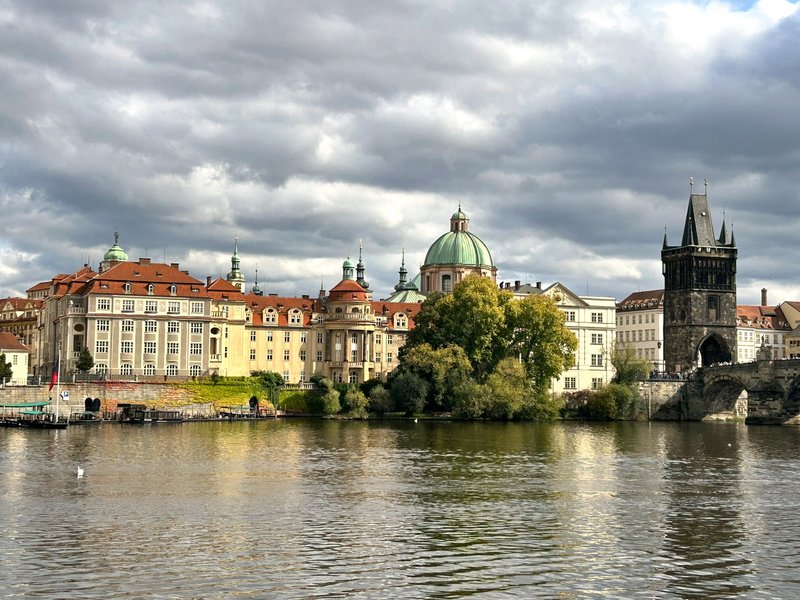
Prague looks compact.
In practice, it’s a time-consuming city.
There are three main reasons for this:
- Walking Distances Are Deceptive
Google Maps says “12 minutes.”
But add:
- Cobblestone streets
- Hills
- Crowds
- The constant urge to stop and look
And those 12 minutes quietly become 25.
- The City Isn’t Flat — It’s Layered
Prague isn’t horizontal.
You go down, then up.
You see something close, but you have to go around to reach it.
Visual proximity doesn’t mean practical closeness. - Prague Doesn’t Let You Flow
Some cities let you move effortlessly.
Prague doesn’t.
You stop. You look. You turn back. You enter side streets.
That’s why in Prague, people who try to “do a lot” usually lose.
Those who choose to do less, but do it right, win.
The Old Town Reality: Should You Go, and When Should You Leave?
Yes — you should go to the Old Town.
No — you shouldn’t stay there for long.
The biggest mistake first-time visitors make is treating Prague as if:
“The Old Town is the city.”
The Old Town is:
- The showcase
- The first visual shock
- The beginning of your photo memory
But it is not the city itself.
The ideal scenario looks like this:
- Enter the Old Town on your first day
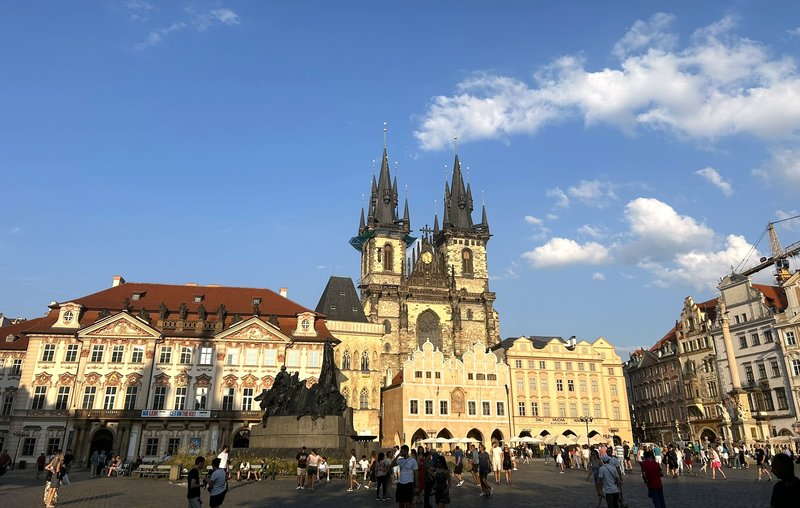
- See the Astronomical Clock
- Feel the streets
- Notice the crowds
- Say “Okay, I understand this part”
and leave
Staying too long in the Old Town has a cost:
- Walking the same streets over and over
- Falling into overpriced tourist restaurants
- Postponing the real city for “later”
Prague starts beautifully in the Old Town,
but it gains meaning outside of it.
Prague Is Not a City You Explore with a Checklist
One of the worst things you can do in Prague is this:
“Make a checklist and tick places off.”
Because Prague:
- Doesn’t reward box-ticking
- Gains meaning through connections, not locations
- Is shaped by transitions, not highlights
You remember the street leading to the church more than the church itself.
You remember how you entered a square, not just the square.
That’s why in Prague:
- Flow matters more than lists
- Tempo matters more than programs
- Balance matters more than a single center
In the next sections,
I’ll explain how to build that balance — step by step.
How Should You Think Before Exploring Prague?
The most important preparation before coming to Prague isn’t a map —
it’s a mental framework.
Most cities ask you to:
“Explore me.”
Prague asks something different:
“Don’t try to figure me out. Adapt to me.”
That small difference changes everything.
In Prague:
- The city resists when you try to do too much
- It opens up when you allow yourself to slow down
Before arriving, it helps to adjust your expectations in three ways:
- Not Every Day Has to Feel “Productive”
Some days are just for walking.
Some days are for staying in one neighborhood.
This isn’t wasted time — it’s how Prague works. - Beauty Doesn’t Always Reveal Itself Immediately
Prague’s best moments often appear:
- On side streets
- In cafés you didn’t plan to enter
- In parks that weren’t marked on your map
- Prague Doesn’t Want You to Rush
It wasn’t built to be consumed quickly.
The harder you push, the less it gives back.
With this mindset, Prague stops feeling “difficult”
and becomes a city that opens slowly but stays with you.
How Many Days Seem Enough — and How Many Actually Are?
This is one of the most common questions about Prague.
But the real issue isn’t how many days — it’s what kind of days.
Still, to be clear:
2 days:
– Old Town and a few classics
– Pleasant but superficial
– You’ve “been there,” but there’s no connection
3 days:
– The minimum threshold for first-time visitors
– One day of fascination, one day of fatigue, one day of adjustment
– The city starts to make sense
4 days:
– The ideal length of stay
– Your pace settles
– Neighborhoods begin to matter
– You start asking, “Could I live here?”
Five days or more moves beyond tourism
and becomes a rhythmic city experience.
So when people ask, “Is two days enough?”
The honest answer is:
“Enough — but it won’t explain Prague.”
Walking or Public Transport: Which One Should You Choose?
Prague is often described as a city you explore on foot.
That’s true — but incomplete.
Trying to see Prague only by walking
actually limits your experience.
The best approach is a mix:
- Short walks
- Well-chosen tram rides
- Occasional metro use
Trams, in particular:
- Teach you the city’s rhythm
- Offer moving views
- Solve elevation problems for you
The romantic idea of “walking everywhere”
turns into exhaustion by day two.
Walking is beautiful —
but walking smart is what matters in Prague.
Why Where You Stay Changes Everything
In Prague, accommodation shapes your entire experience.
Because the city:
- Doesn’t have a single center
- Moves at different speeds in different neighborhoods
- Feels completely different after dark depending on where you are
Stay in the wrong area, and Prague becomes:
- A city of constant transport calculations
- Evenings that end too early
- A place you’re always trying to “get back to”
Stay in the right area, and:
- Evening walks happen naturally
- The city continues after sunset
- You stop traveling through Prague and start living in it
This is why accommodation deserves its own detailed guide.
👉 “Where to Stay in Prague: A Neighborhood-by-Neighborhood Guide”
I’m not going into details here because it genuinely changes everything.
Why the First Day Is the Most Critical Day in Prague
Your first day in Prague is a quiet agreement between you and the city.
On day one:
- Those who try to do too much usually lose
- A wrong route creates distance
- The right pace opens the door to the rest of the trip
The first day determines:
- Whether you’ll like the city
- How the following days will feel
- Whether Prague becomes “touristic” or personal
That’s why day one shouldn’t be random —
but it also shouldn’t be tightly scheduled.
There is a specific walking approach that balances this perfectly.
It deserves its own article.
👉 “Prague Walking Route for First-Time Visitors”
Prague in 2026: What Has Changed — and What Hasn’t
Prague is one of those cities that changes quietly while keeping its core intact.
By 2026, some things are undeniably different — but they don’t turn Prague into a different city.
What has changed:
- Tourist density around the Old Town has increased
- Some classic spots are now fully tourist-oriented
- Prices are noticeably higher, especially in central areas
- Digital payments and public transport systems are smoother than ever
What hasn’t changed:
- The distinct rhythm of each neighborhood
- The way the city slows down in the evenings
- The relationship between the city and its tram lines
- The fact that side streets still outperform the main stage
So yes — Prague may be:
- More crowded
- More expensive
But it hasn’t become shallower.
It is still a city that:
- Opens itself to patience
- Closes to speed
- Rewards time
Which is why the most valid rule for Prague in 2026 remains the same:
“The slower you go, the more real it becomes.”
What Should You Do After Reading This?
This article didn’t give you a fixed route.
That was intentional.
Because in Prague, the real question isn’t:
“Where should I go?”
but
“How should I move?”
If you’ve read this far, you now know:
- Prague is small but time-demanding
- The Old Town is a starting point, not the destination
- Checklists don’t work here — balance does
- Walking is essential, but not enough on its own
- Where you stay changes everything
- The first day shapes the entire experience
Your next steps are simple:
- Choose where you stay wisely
A wrong booking decision is one of the most expensive mistakes in Prague.
👉 Where to Stay in Prague: A Neighborhood-by-Neighborhood Guide
- Plan your first day with intention
The day that decides whether Prague clicks or not is day one.
👉 Prague Walking Route for First-Time Visitors
This article was your starting point.
What follows will go deeper — maps, neighborhoods, routes —
but always with the same principle:
Not to conquer Prague,
but to move in harmony with it.